

Attendance Forecasting: Planning Sunday Before Sunday Happens
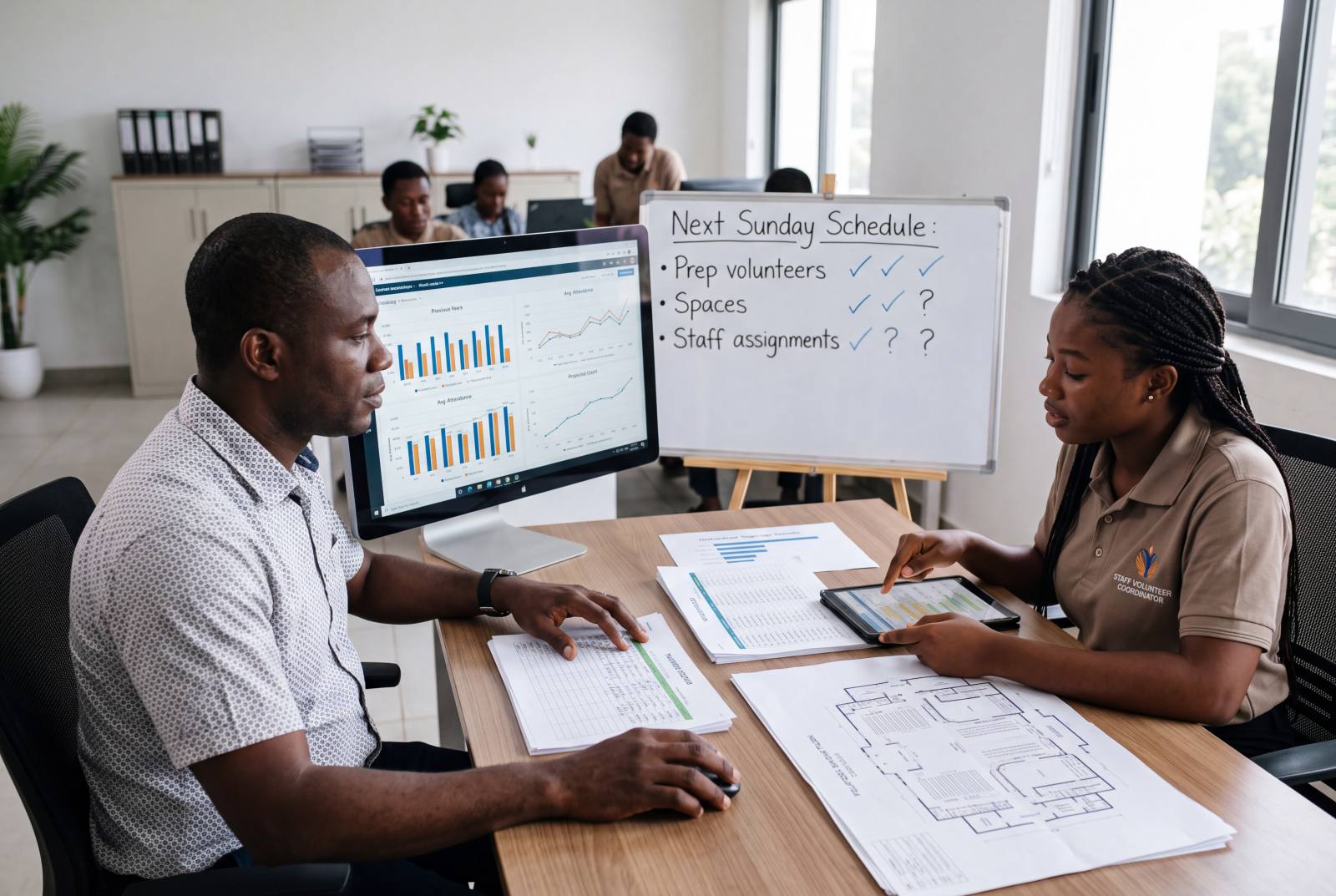
Every Sunday brings a fresh wave of logistical questions: How many volunteers do we actually need? Should we open the overflow room? Will there be enough printed bulletins, enough seats in children's ministry, enough parking attendants in the lot? For most church leaders, these decisions get made on gut instinct and last-minute scrambles. Attendance forecasting changes that equation by giving your team reliable, data-informed expectations before the doors ever open.
At its core, attendance forecasting means using your church's historical attendance patterns — along with factors like holidays, special events, weather trends, and local school calendars — to project how many people are likely to show up on any given Sunday. It sounds sophisticated, but it doesn't have to be complicated. Even a simple review of your attendance records from the same Sunday in prior years can reveal patterns that are surprisingly consistent and actionable.
One of the greatest benefits of forecasting is how it ripples through your entire ministry operation. When your children's ministry director knows ahead of time that a holiday weekend typically draws fewer families, she can schedule volunteers more efficiently and avoid burning out her team. When your worship leader knows a special outreach Sunday tends to bring first-time guests, he can make sure the service flow is especially welcoming. Forecasting turns reactive ministry into proactive ministry — and that shift matters deeply for both your staff and your congregation.
Church management platforms like Kingdom Vitals make this kind of planning far more accessible by centralizing your attendance data and helping you spot trends over time. Rather than digging through spreadsheets or relying on memory, your leadership team can quickly pull up attendance histories, filter by service type or time of year, and use that information to make smarter decisions weeks in advance. Good data doesn't replace pastoral wisdom — it supports it.
Getting started doesn't require a perfect system or a large staff. Begin by simply tracking attendance consistently and tagging notable factors alongside each Sunday's numbers — things like whether it was a holiday, a baptism Sunday, or a five-Sunday month. Over time, even a modest dataset becomes a powerful planning tool. The goal isn't to predict the future with certainty; it's to walk into each weekend with confidence, clarity, and a team that feels prepared rather than caught off guard.
Ultimately, attendance forecasting is an act of stewardship. Your volunteers give their time, your staff invests their energy, and your congregation trusts that Sunday will be a meaningful experience. Planning ahead — with real data guiding your decisions — honors all of those commitments. When you plan Sunday before Sunday happens, you free yourself to focus less on logistics and more on the people walking through your doors.